







Philippines
1. Activities (2023- )
| Month/ Year | Places (Prefecture, etc.) | Activities |
| 2026/04/20-04/23 | Iriomote Island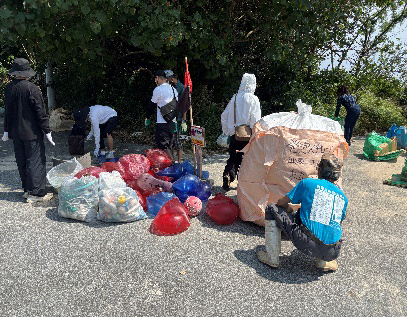 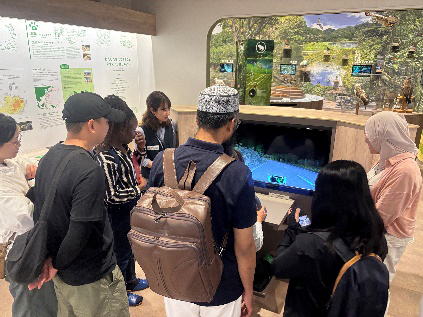 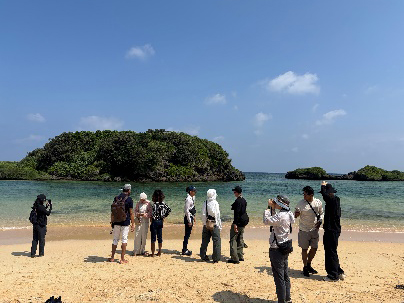 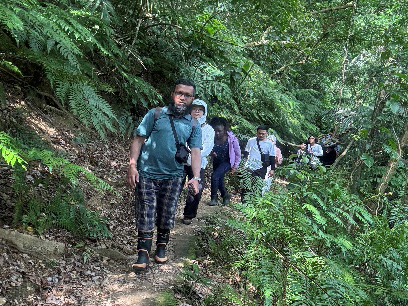 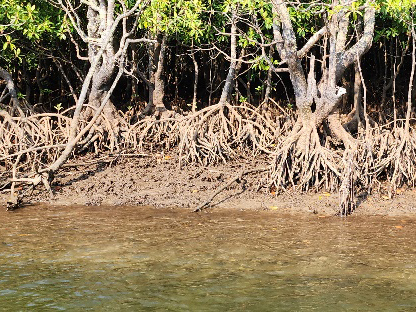 |
The purpose of the internship was to observe the current situation and challenges regarding wildlife conservation and human life by visiting actual field sites and gaining hands-on work experience. This year, at the Wildlife Conservation Center, we attended a lecture and Q&A session led by a conservation officer from the Ministry of the Environment, participated in a beach cleanup to collect debris, observed mangrove forests, walked along trails within the nature reserve, and observed wildlife—including rare species. Through these activities, we gained a deeper understanding of the challenges involved in maintaining natural ecosystems and conserving the environment and wildlife. |
| 2026/02/02-02/06 | Taiwan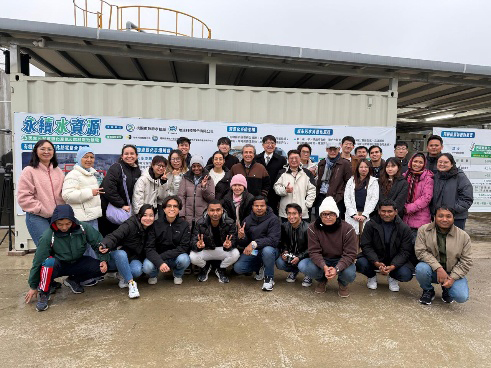 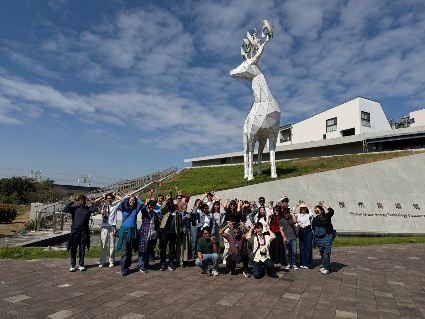 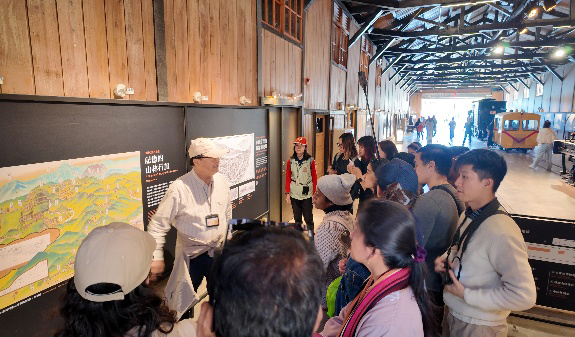 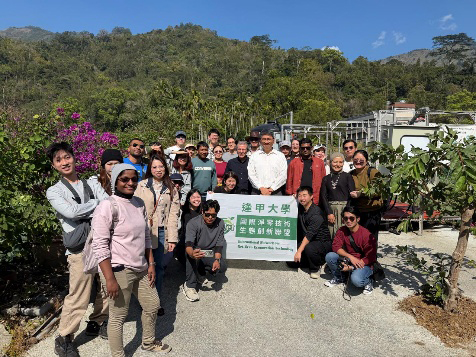 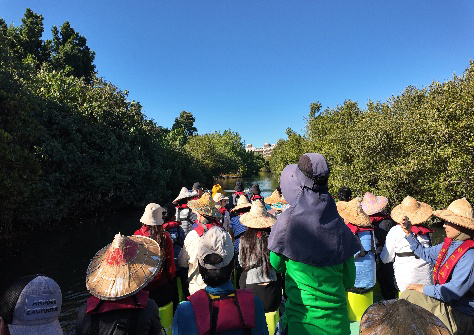 |
Our internship in Taiwan highlighted how innovation, policy, and community can support sustainable development. From a smart energy facility in Tainan and an organic waste to hydrogen plant in Taoyuan, to protected forest reserves and historical communities, each site revealed a different dimension of the country's approach to sustainability. Together, these experiences deepened our understanding of what it takes to build sustainable systems for the future. |
| 2025/12/01 | Ibaraki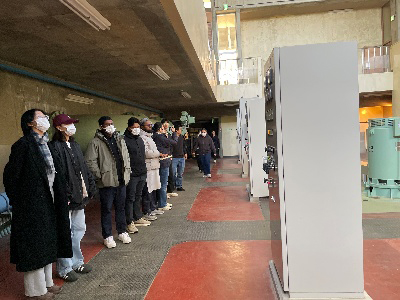 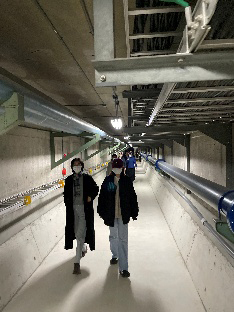 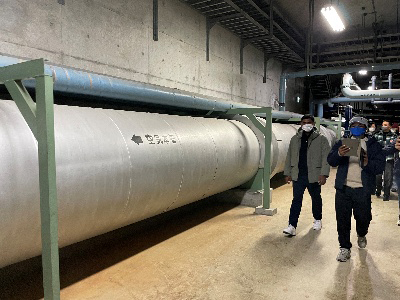 |
During the Ibaraki field study, we conducted a site visit focused on the circular bioeconomy. Through our tours of the Kasumigaura Water Purification Center and Aiyu Sake Brewery, we learned about water quality management and resource utilization leveraging the power of biological processes. These experiences provided deep insights into how biotechnology is closely intertwined with our daily lives, and how traditional fermentation techniques have evolved while shaping Japanese culture. |
| 2025/07/28-07/30 | Tohoku internship on disaster prevention (Tohoku) 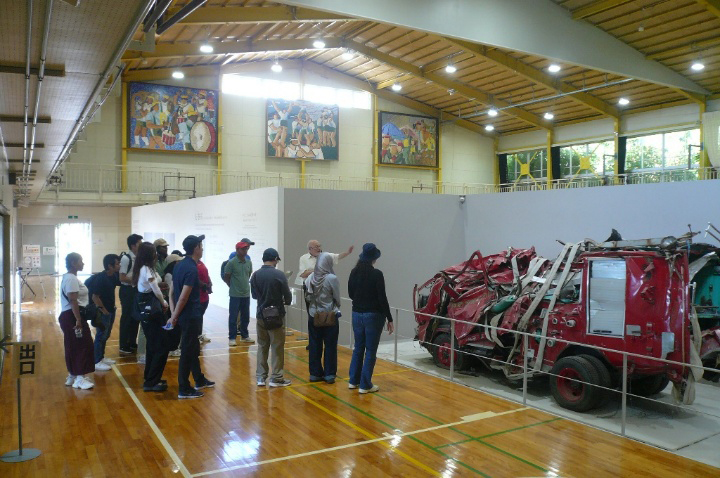 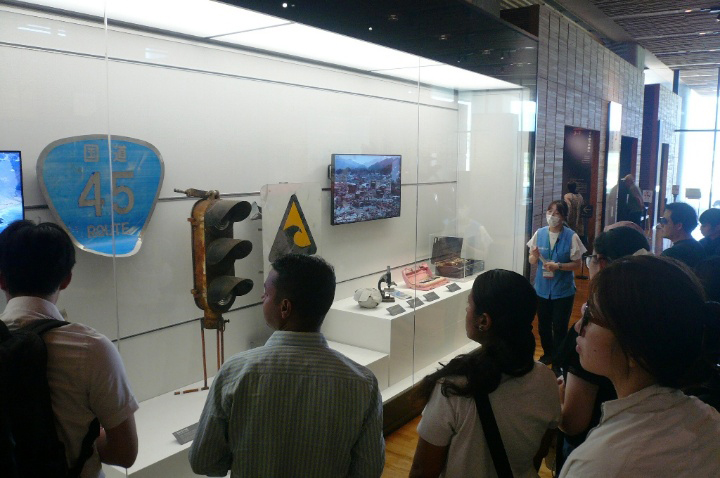 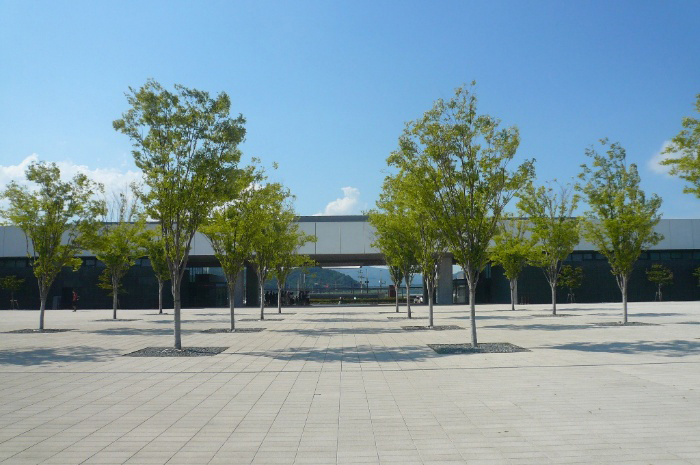 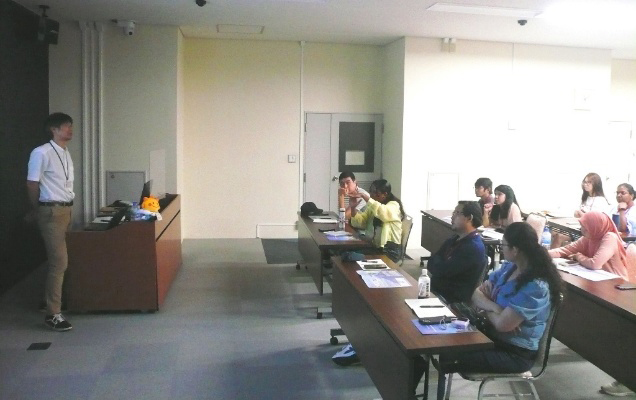 |
The participants of this internship visited Miyagi and Iwate Prefectures in Tohoku district to learn the reality of the damage caused by the Great East Japan Earthquake 2011. They visited disaster memorial museum and learned how devastating the tsunami damage was. Also, in the Meteorological Research Institute, they attended a lecture on Tsunami early warning system for disaster mitigation. |
| 2025/07/23-07/25 | Osaki Town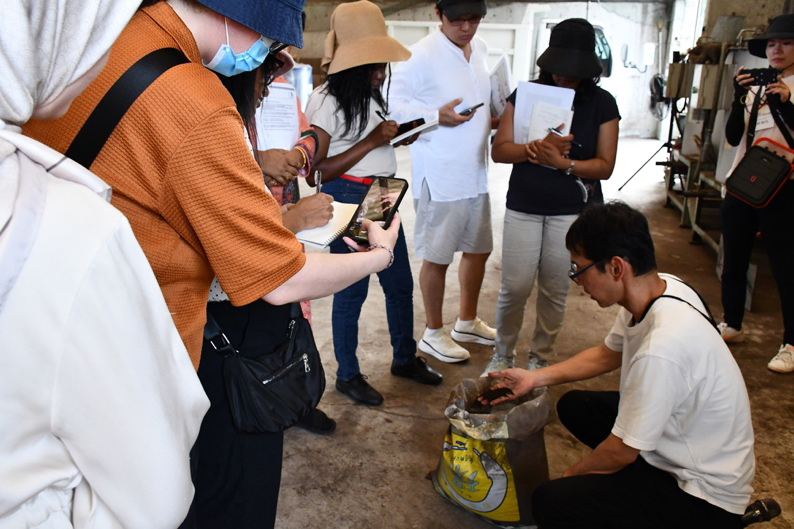 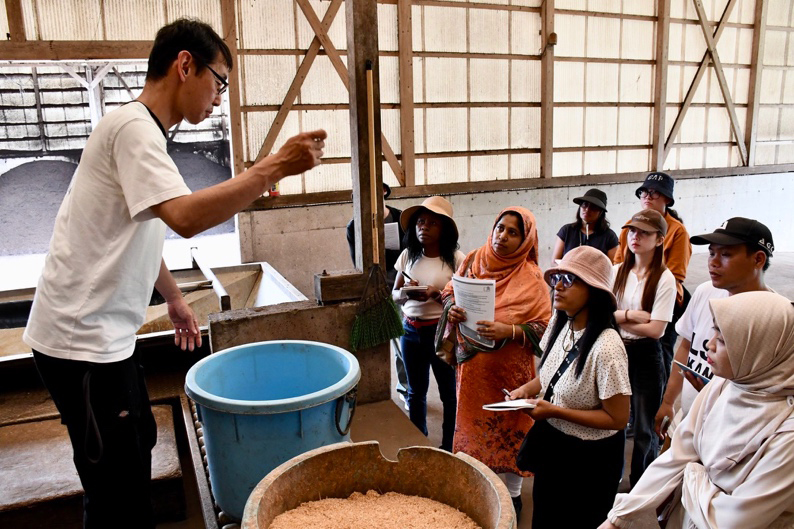 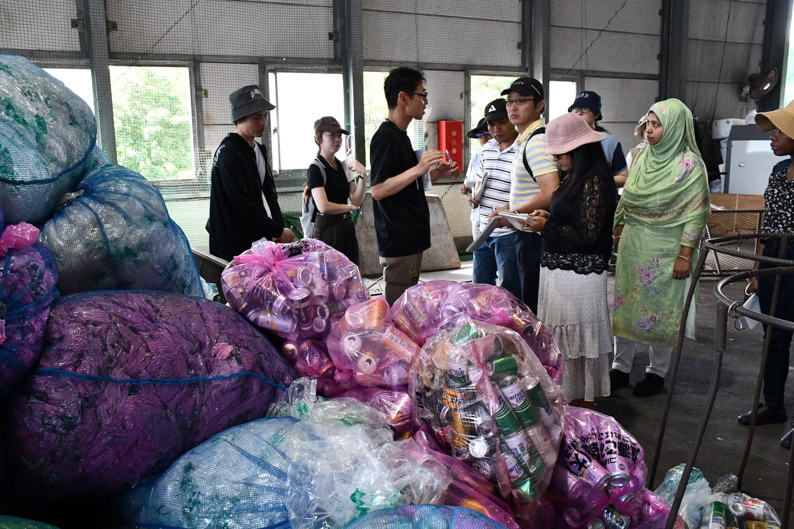 |
We visited Osaki Town, Kagoshima Prefecture, to explore the frontiers of circular society through one of Japan's most distinctive waste management initiatives — the Osaki System. Built on the town's original concept of a "Circular Village," the Osaki System has advanced through close collaboration among the municipal government, residents, and private companies. During the trip, we toured key facilities underpinning this system: the final disposal site, the organic composting facility, the non-organic waste recycling center, and a community-level recyclable waste collection point. These visits gave us firsthand insight into how Osaki Town transformed a waste crisis into a model of circular resource management. We also attended lectures by experts from the Osaki Town Office and the Osaki Town SDGs Council, who shared their future vision for strengthening the system and disseminating the Osaki model to other municipalities across Japan and beyond. On the final day, we came together for group work sessions to reflect on our experiences and discuss how the principles of the Osaki System might be applied in our own home countries and cities. |
| 2025/06/01-06/04 | Iriomote Island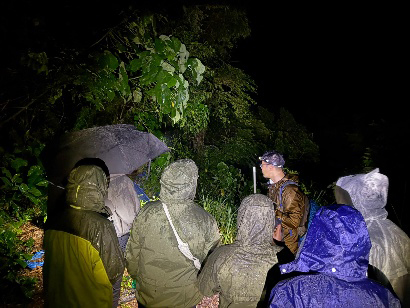 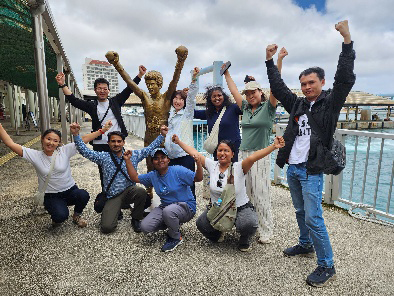 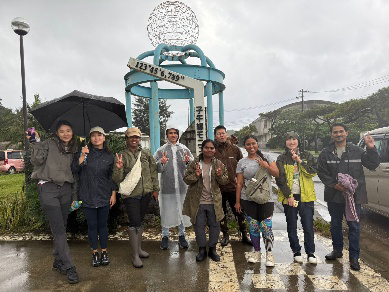 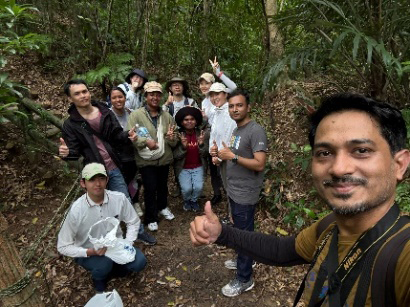 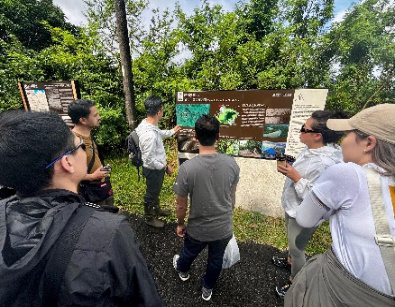 |
The purpose of the Iriomote Island internship was to gain a deeper understanding of wildlife conservation and the current state of human life on the island, as well as the challenges it faces, by observing the actual field conditions. We toured the Wildlife Conservation Center, conducted surveys of local residents, assessed the current state of debris on the coast, observed mangrove forests, walked along trails within the nature reserve, and observed wildlife, including rare species. Throughout the internship, we gained a deeper understanding by sharing our thoughts and experiences with one another. |
| 2025/02/19-02/21 | Osaki Town (Kagoshima)     |
We visited Osaki Town in Kagoshima Prefecture to learn about circular societies through effective waste separation and recycling, specifically the Osaki System. This initiative has progressed through close collaboration among the municipal government, residents, and private companies based on their original concept of Circular Village. During the field trip, we toured the final disposal site, the organic composting facility, the non-organic waste recycling center, and one of the community-level recyclable waste collection points. This experience helped us understand how Osaki Town overcame the waste crisis and developed a distinctive circular system. We also attended lectures by local experts from the Osaki Town Office and the Osaki Town SDGs Council to learn about their future vision for enhancing their efforts and promoting the Osaki System to other municipalities in Japan and abroad. On the final day, we participated in group work sessions to share and discuss our ideas regarding the applicability of the Osaki System in our home countries and cities. |
| 2025/02/11-02/13 | Okinawa    |
This field activity in Okinawa focused on acquiring knowledge about Okinawa’s ecosystems, its history and past struggle for peace, the impact of developments on the marine ecosystem, endangered species conservation against invasive species at world heritage sites, and tourism development through regional developments. This was done through site visitation and interviews with local people and experts. The first day highlighted Okinawa’s history and future visions that were incorporated into architectural designs (e.g., Sakima Art Museum) by inviting a renowned architect, Mr Makishi. On the second day, the focus was placed on environmental and social concerns over U.S. military base construction in Henoko Bay along with the possibility of coexistence between military bases and world heritage site management. The day also included a visitation to a traditional banana fiber textile production workshop, which is now being recognized as the national importance cultural heritage. The third day focused on coral reef protection and Ramsar wetland protection/restoration efforts in urban coastal areas. After these site visitation and interviews, students conducted comparative analyses with some situations in their own country and sought for some solutions. Overall, this activity improved students’ problem analysis-solving abilities. |
| 2025/02/03-02/06 | Taiwan   | A visit to Ecotech's bioplastics plant incorporated the “zero plastic” philosophy as an important aspect of its commitment to the global Sustainable Development Goals (SDGs); a visit to the Weipu Ecology Park was helpful in learning about the production of renewable energy from food waste; and a visit to the Weipu Food Waste Management Center was a great opportunity for the students to learn about the production of renewable energy from food waste. The visit to the Weipu Ecology Park was helpful in learning about the production of renewable energy from food waste. The Plastics Industry Technology Development Center continues its mission to enhance the competitiveness of the industry in line with its broader objectives of sustainable development and environmental awareness. As part of this effort, our students had the opportunity to learn about sustainable practices in Taiwan. They also embarked on a tour of the Sun Moon Lake area to learn about the surrounding area's flood and disaster preparedness case studies and exchange views. |
| 2025/01/31 | Tokyo   |
This activity focused on mitigation and adaptation practices in Tokyo in dealing with climate change and water related disasters. Site visits included the Arakawa Museum of Aqua (AMOA), Arakawa Floodway, Nakagawa Funabansho Barege Museum, and Arakawa lock gate. At the AMOA, through a guided tour, we collected information about the history of floodway and flood gate that eliminated flood risks along the Sumida River watershed in Tokyo. The lock gate is a small version of the Panama Canal system, and students acquired knowledge about water level regulations. At the barge museum, volunteer guides explained about Tokyo’s historical river navigation management systems. We also step out of the building and explored Tokyo’s superlevee project, which was designed to protect watershed properties from flood and earthquake risks. It also functions as evacuation site. The whole activity facilitated opinion exchange among participants and guides to enhance analytical skills within an international context. |
| 2024/11/26 | Tsukuba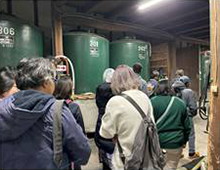   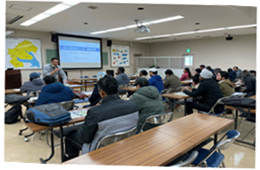 |
The participants visited a water treatment plant, a sake brewery, and a soy sauce brewery in the Kasumigaura Lake region to explore the potential of biotechnology in advancing a sustainable society. During the internship, they learned how biological processes are applied and managed. They also gained insight into agrotourism by studying the rich history of sake and soy sauce fermentation, discovering how these traditions are deeply intertwined with Japanese culture and Have contributed to the local community. |
| 2024/08/10-08/14 | Shanghai (China)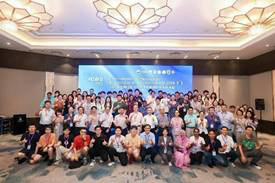 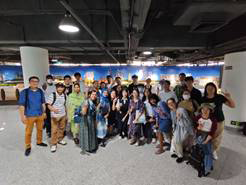 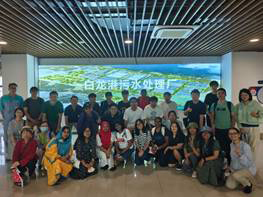 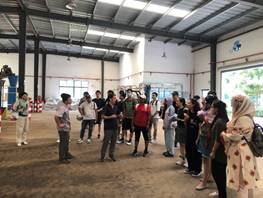 |
From August 10 to 11, the students attended the International Conference on Bioprocess and Sustainability 2024 (ICBS2024) organized by Shanghai Academy of Environmental Sciences, Tongji University, Shanghai University, Tsinghua University, Nankai University, Hainan University and University of Tsukuba. In this conference the students had a good communication with the 18 invited professors and about 300 participants on the advancements of biological processes and their contributions to sustainable development goals (SDGs). In the following three days, the students firstly visited Shanghai Mengqing Theme Park where they acquired the history of water pollution, sewage collection, and management in Shanghai. During the visit to Shanghai Bailonggang Wastewater Treatment Plant (WWTP), the largest WWTP in Asia, the students learned how this largest WWTP treats about one-third of the sewage and sludge produced in Shanghai and gradually improves its sustainability. In Shanghai Qingpu Agricultural Park, they deeply understood how the local farmers environmentally friendly manage their farmland including irrigation system and agricultural wastes with improved crop productivity and quality in the context of SDGs. |
| 2024/07/30-08/01 | Tohoku 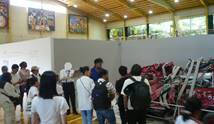 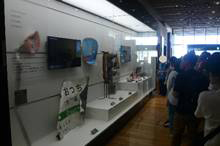 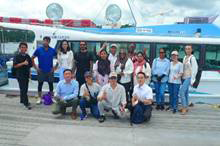 |
The participants visited disaster remains and museums in Miyagi and Iwate Prefectures to learn about the actual damage caused by the earthquake and tsunami of the Great East Japan Earthquake. The participants visited the Matsushima Coast and learned about the importance of tourism resources in the recovery process. Furthermore, they learned about the differences in disaster prevention efforts among various countries. |
| 2024/02/26 | Saitama & Tochigi 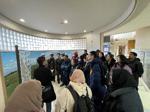 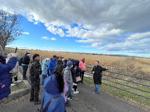 |
The participants visited the Metropolitan Area Outer Discharge Channel, which is designed to reduce flood disasters in the upstream areas from the Edo River to the Tone River. They collected information and exchanged views about its functions, effectiveness and costs about this world’s largest underground flood management facility. They also visited Watase Artificial Wetland, a Ramsar site, to gather information and exchange views about flood control, water supply, history of copper poisoning incident, wetland ecosystem and the role of annual controlled burning practices. |
| 2024/02/19-02/22 | Taiwan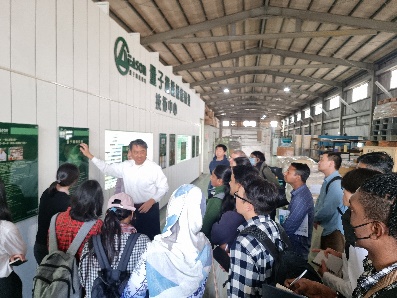 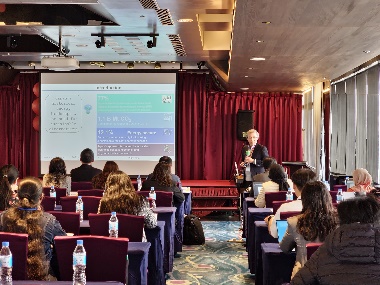 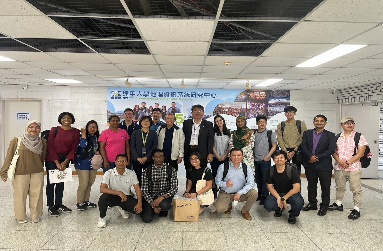 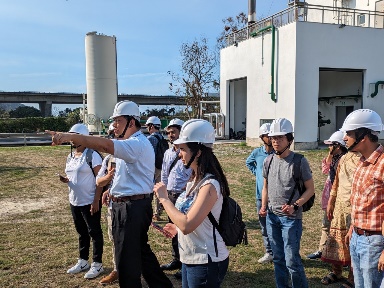 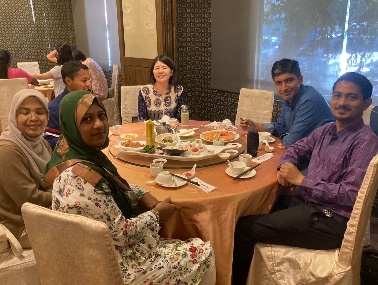 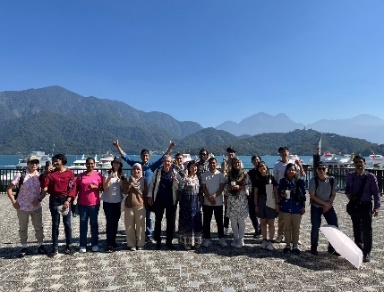 |
The filed study promoted international exchanges for r different disciplines, especially integrated solid waste management, material science, technology innovation for small island economy, and ways to meet sustainable development goals through the collaboration of industry, educational institutions, and local community members. Participants learned from different green technology institutes at Feng Chai University especially related to bioplastics and GIS. They also learned about international platform for biotechnology professionals to share technologies and research achievements through collaboration to develop relevant technologies in the bioenergy sector. |
| 2024/01/31 | Tokyo 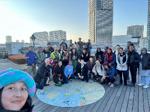 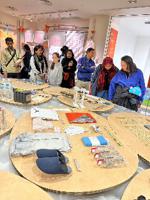 |
The participants visited areas in and around Tokyo to learn about flood and disaster preparedness and exchange views. In Tokyo, the participants gathered information about super levees along the Sumida River and the disaster prevention measures. Shioiri Park is located on the super levee that is designed for the evacuation site with emergency camp sites. They also visited Tokyo Rinkai Disaster Prevention Park in Tokyo Bay to experience disaster measures within 72 hours. Regarding private sector disaster management measure, they observed newly established Azabudai Hills. |
| 2023/12/02, 12/8 | TSUKUBA, Research Institute 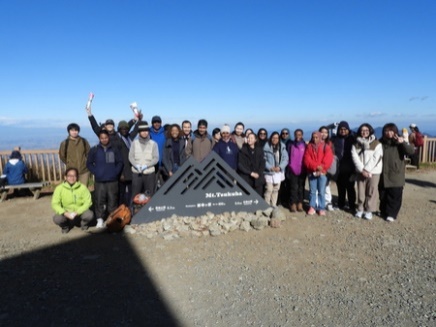 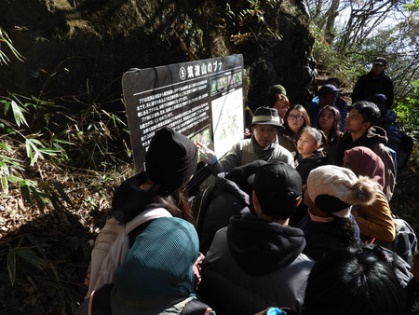 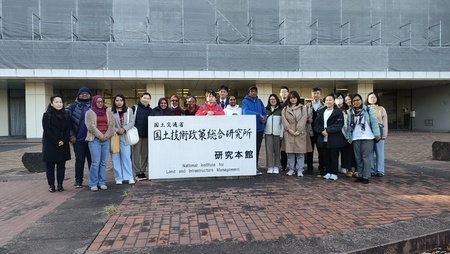 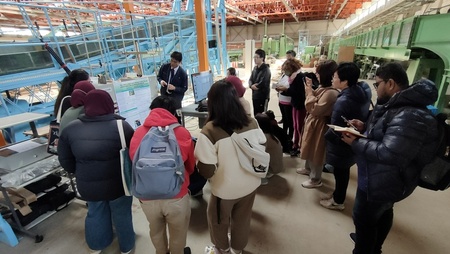 |
Tsukuba and received on-site explanations from Dr. Tanaka, an expert on the impact of climate change on beech forests in the area (2 Dec). At the National Institute for Land and Infrastructure Management (NILIM), the participants received training on sediment disasters and their countermeasures from Dr. Yamakoshi Director of the Erosion Control Research Office, and toured the experimental facilities. ibid. (8 Dec.). This enabled us to comprehensively enhance our knowledge on climate change issues from three perspectives: forecasting, natural effects (ecosystems) and social effects (disasters). |